
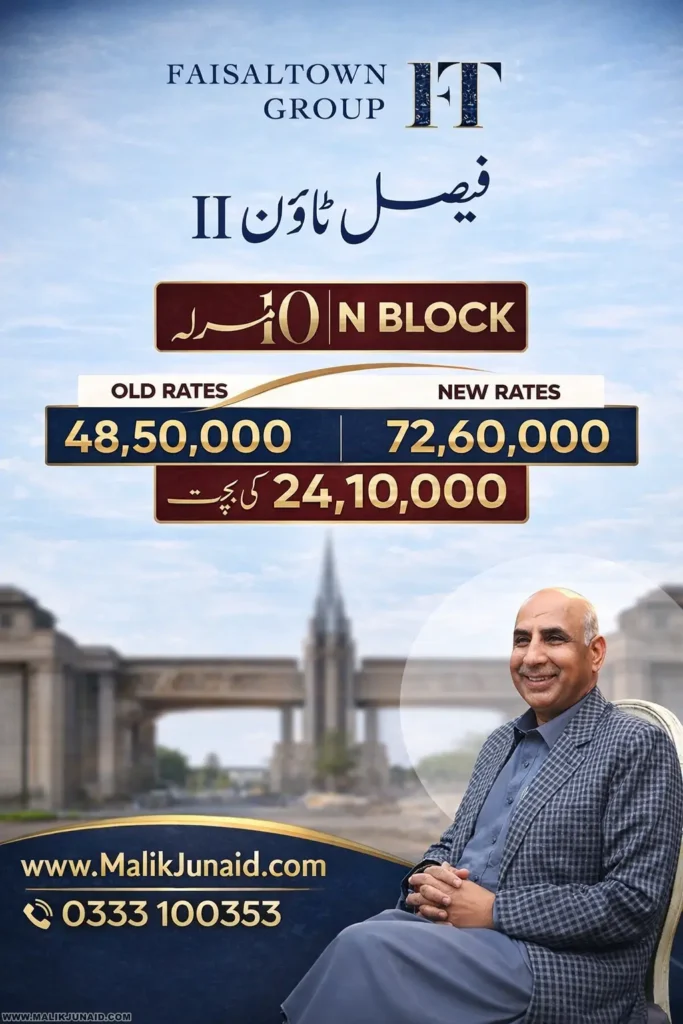
The Rawalpindi real estate market is entering a new cycle of transformation — and the driving force behind it is the Rawalpindi Ring Road.
Infrastructure projects rarely move quietly. They change travel patterns, reshape demand corridors, and most importantly, they redefine property valuation models. As the Ring Road progresses, the areas connected to it are experiencing a noticeable shift in investor behavior and pricing expectations.
Among the projects positioned within this strategic growth belt, Faisal Town Phase 2 stands out due to its location near Thalian Interchange and the M-2 Motorway.
This article explores how Rawalpindi Ring Road is influencing the market and why Faisal Town Phase 2 prices may not remain at current levels for long.
Why Rawalpindi Ring Road Is More Than Just a Road
The Rawalpindi Ring Road is designed to:
- Reduce congestion within central Rawalpindi
- Connect major interchanges
- Improve travel efficiency between motorways
- Open new development corridors
The route includes major connectivity points such as:
- Banth
- Chak Beli Khan
- Adiala
- Chakri
- Thalian (Airport Link)
These nodes are becoming focal points for real estate growth.
Infrastructure changes accessibility. Accessibility changes demand. Demand changes prices.
The Strategic Position of Faisal Town Phase 2
Faisal Town Phase 2 benefits from multiple connectivity advantages:
- Direct access to M-2 Motorway
- Close proximity to Thalian Interchange
- Short drive to Islamabad International Airport
- Location along Chakri Road
With Ring Road integration, the travel experience between major highways and residential sectors becomes smoother and faster. Reduced commute time always enhances property attractiveness.
In real estate, connectivity is currency.
Market Behavior After Infrastructure Announcements
Whenever a major road project enters advanced development stages, several things happen:
- Investor inquiries increase
- Site visits rise
- Market confidence improves
- Demand accelerates
- Pricing adjustments follow
This pattern has been observed in multiple cities across Pakistan. Rawalpindi Ring Road is now triggering similar movement along its corridor.
Faisal Town Phase 2 is located within this influence zone.
Old Rates vs Emerging Valuation Reality
When Faisal Town Phase 2 initially entered the market, pricing reflected:
- Early development phase
- Uncertainty around infrastructure timeline
- First-stage investor risk
Those rates were introductory in nature.
Today, development progress is visible, connectivity is strengthening, and investor sentiment is shifting. In such scenarios, introductory rates rarely remain stable for long.
Old rates represent the earlier stage of the project.
Current infrastructure progress represents the next stage.
How Ring Road Directly Impacts Faisal Town Phase 2
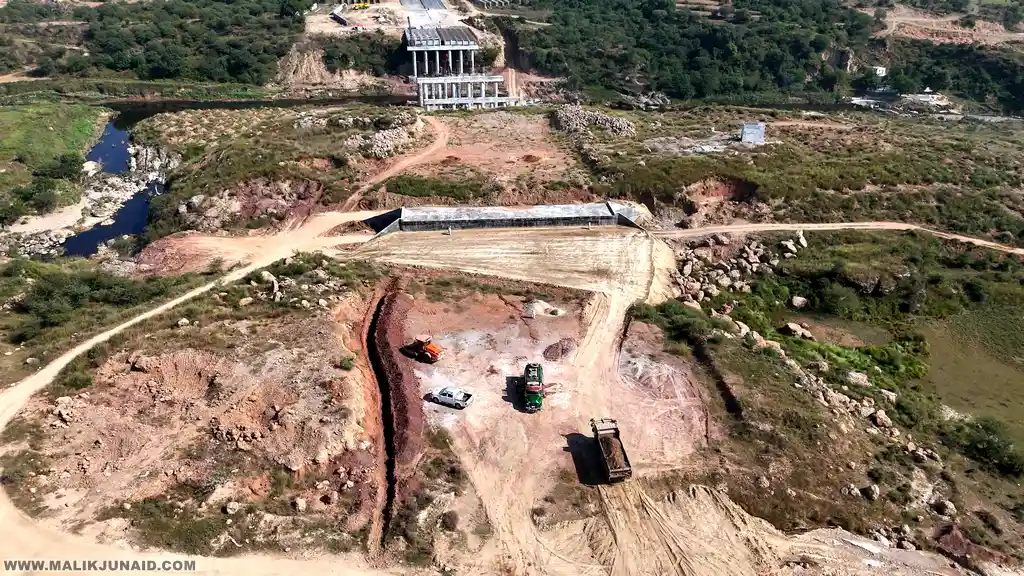
The impact is both practical and psychological.
Practical Impact:
- Shorter travel time
- Easier motorway access
- Improved airport connectivity
- Higher movement efficiency
Psychological Impact:
- Increased buyer confidence
- Greater investor urgency
- Stronger resale perception
Both factors influence price structure.
Chakri Road – The Emerging Growth Corridor
Chakri Road has evolved significantly over the past few years. What was once peripheral land is now a developing residential and commercial belt.
The presence of:
- Motorway interchanges
- Airport corridor
- Ring Road linkages
has elevated its importance in the Islamabad–Rawalpindi expansion model.
Faisal Town Phase 2 sits strategically within this transformation zone.
Developer Price Revision Cycles – How They Typically Work
Developers revise prices when:
- Development reaches key milestones
- Infrastructure becomes functional
- Demand outpaces supply
- Inventory begins to tighten
The Ring Road factor increases the likelihood of these conditions emerging simultaneously.
Price revisions are often structured and incremental — but they reflect changing market realities.
Is a Price Revision Expected?
While only official announcements confirm revisions, market indicators suggest upward pressure.
Factors influencing this pressure include:
- Improved connectivity
- Growing investor awareness
- Stronger regional demand
- Expansion of residential population
Historically, such conditions create structured rate adjustments.
Commercial Growth Potential Along Ring Road
Infrastructure corridors naturally attract commercial activity.
As interchanges become operational, surrounding areas witness:
- Retail expansion
- Service business growth
- Increased footfall
- Higher rental demand
If commercial zones within Faisal Town Phase 2 expand in parallel with Ring Road progress, property valuation dynamics may strengthen further.
Investment Strategy in Infrastructure-Driven Markets
In infrastructure-influenced markets, timing becomes crucial.
Investors typically benefit when they enter:
- Before major announcements
- Before formal price sheet revisions
- Before infrastructure completion
Once a project fully stabilizes, pricing reflects reduced uncertainty — and margins narrow.
Faisal Town Phase 2 currently sits in the transitional window between early development and full infrastructure maturity.
Long-Term Urban Expansion Trends
Islamabad and Rawalpindi are expanding outward due to:
- Population growth
- Traffic redistribution
- Infrastructure development
- Commercial decentralization
Motorway-linked and Ring Road-connected housing societies are likely to remain relevant in this long-term growth pattern.
Faisal Town Phase 2 aligns with these expansion dynamics.
Risks and Considerations
Investors should continue to evaluate:
- Official approvals
- Development updates
- Transfer procedures
- Market liquidity
Infrastructure impact strengthens projects, but due diligence remains essential.
Market Conclusion
Rawalpindi Ring Road is not merely an infrastructure project — it is a catalyst reshaping the investment map of the region.
Housing societies positioned along its corridor are entering a new valuation phase. Faisal Town Phase 2, due to its strategic connectivity and growing development base, stands within this transition zone.
Old prices were structured for early-stage uncertainty.
Future pricing may reflect infrastructure-driven confidence.
In real estate, roads create momentum — and momentum often translates into revised market benchmarks.